

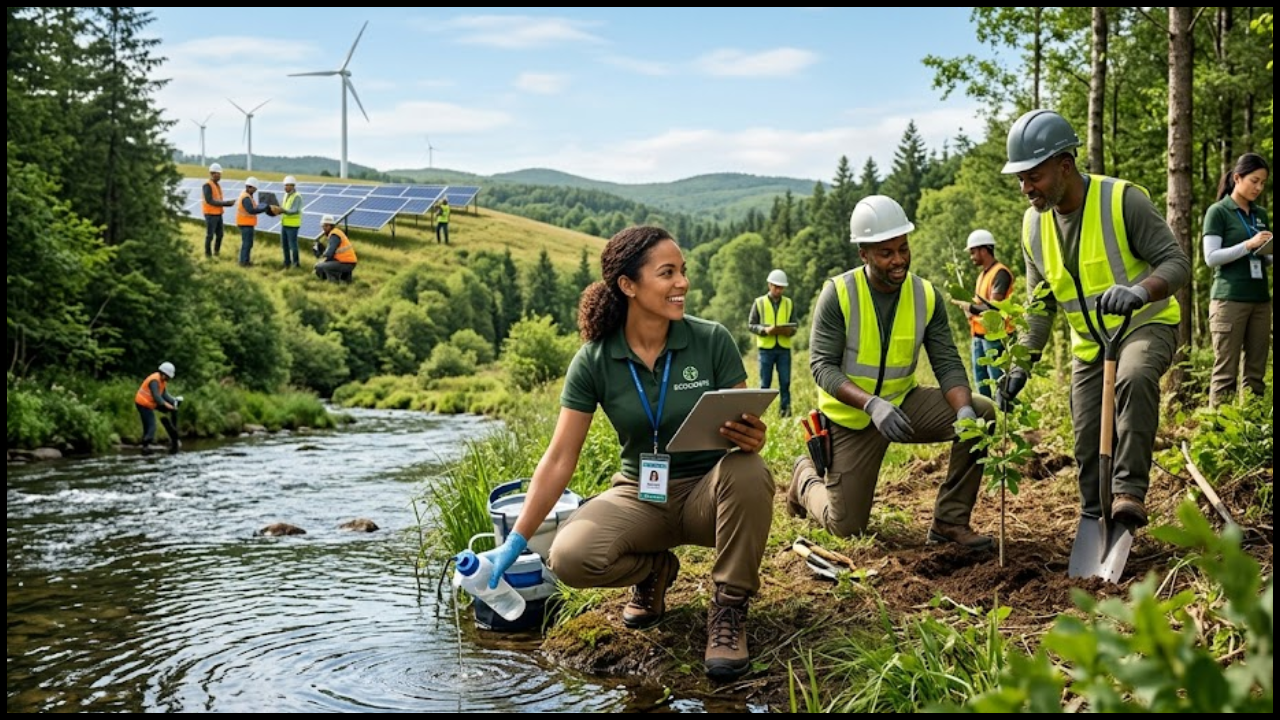
The global shift toward sustainability is creating thousands of new career paths across industries. Moreover, climate change, pollution control, and resource management are now top priorities for governments and companies. As a result, this transition has significantly increased demand for skilled professionals in environmental fields. In addition, many students and job seekers are now actively exploring green career options. Overall, the future of this field is strong, stable, and continuously expanding.
Furthermore, environmental careers are no longer limited to scientists or researchers. Engineers, planners, consultants, and technicians are now part of this growing workforce. Because of increasing awareness, organizations are investing heavily in eco-friendly solutions and sustainable development. Consequently, environmental careers have become more mainstream than ever before. As industries evolve, job opportunities continue to grow steadily.
In addition, the focus on clean energy, conservation, and sustainability is reshaping the job market. Governments are introducing strict environmental regulations to ensure compliance. Similarly, businesses are adopting greener practices to meet global standards. This is opening new pathways for employment worldwide. Therefore, this field is becoming a long-term and future-focused career direction.
What Are Environment Jobs?
Environmental careers refer to roles that focus on protecting nature and improving sustainability. These jobs include pollution control, conservation work, and renewable energy projects. Professionals in this field actively help reduce environmental damage. Moreover, they support global sustainable development goals.
Additionally, these roles exist in both government and private sectors. Many NGOs also hire environmental specialists for field and research work. Work can include data analysis, field studies, or policy development. In this way, each role contributes to protecting ecosystems and natural resources.
Overall, the importance of this field continues to grow globally. Industries must follow environmental laws and sustainability standards. As a result, the demand for trained professionals is increasing rapidly. It has now become a critical part of modern employment systems.
Types of Environment Jobs
There are many career paths available in environmental fields. Each role focuses on a different area of sustainability and conservation. These jobs are found in multiple industries and organizations.
In addition, these roles involve research, fieldwork, and technical analysis. Some professionals focus on renewable energy systems, while others protect wildlife and natural habitats. Therefore, all roles contribute directly to environmental protection efforts.
Moreover, the diversity of roles makes this sector highly flexible. Individuals can choose careers based on personal interests and skills. As a result, it also provides strong global employment opportunities. This significantly increases long-term career potential.
For example, common roles include:
- Environmental Scientist
- Wildlife Conservation Officer
- Renewable Energy Engineer
- Climate Change Analyst
- Sustainability Consultant
Career Growth and Opportunities
Career growth in this field is strong due to global sustainability goals. Many industries are expanding their environmental workforce. Consequently, this creates more job openings every year.
Initially, entry-level roles can develop into senior positions over time. With experience and certifications, professionals can improve advancement opportunities. In many cases, individuals move into leadership roles later in their careers. This ensures long-term stability and growth.
Furthermore, governments and companies are heavily investing in green infrastructure. As a result, the demand for experts is increasing steadily. Therefore, career opportunities are expected to rise significantly in the coming years. It is widely considered a future-proof field.
Skills Required for Environmental Careers
Success in this field requires both technical and soft skills. Professionals must understand environmental systems and sustainability practices. Additionally, strong analytical abilities are essential for problem-solving.
These skills are used in research, planning, and field operations. Moreover, communication is also important for teamwork and reporting findings. Employers often prefer candidates with hands-on experience. Therefore, internships and training programs are highly valuable.
In addition, continuous learning is necessary in this evolving field. New technologies are constantly changing how environmental work is done. As a result, staying updated helps professionals grow faster in their careers and improves performance.
Key skills include:
- Environmental data analysis
- GIS (Geographic Information Systems)
- Project management
- Research and report writing
- Problem-solving skills
How to Start a Career in This Field
Education is the first step toward entering this profession. Many universities offer degrees in environmental science and related fields. Additionally, certifications in sustainability can strengthen job opportunities.
Practical experience is equally important. For example, internships and volunteer work help build real-world skills. Many organizations also offer beginner training programs. This helps students gain confidence in professional environments.
Furthermore, networking plays an important role in career growth. Job portals and environmental organizations regularly post vacancies. Therefore, staying active in the field improves opportunities and increases success rates.
Industries Offering Environmental Careers
Many industries now offer opportunities in environmental work. These sectors are actively adopting sustainable practices to reduce environmental impact.
Each industry hires specialists for different environmental tasks. For instance, renewable energy companies focus on clean power solutions. Meanwhile, agriculture uses experts for sustainable farming methods. Government agencies handle policy and environmental regulation.
As a result, this wide industry coverage increases job availability. Professionals can work across multiple sectors depending on their skills. Therefore, it also provides strong career flexibility and growth opportunities.
Key industries include:
- Renewable energy sector
- Agriculture and farming
- Government environmental agencies
- Non-governmental organizations (NGOs)
- Construction and infrastructure
Future of Environmental Careers
The future of this sector is very promising. Climate change and sustainability goals are increasing global demand. Consequently, many countries are shifting toward green energy systems.
Moreover, technology is transforming environmental work. Artificial intelligence and satellite monitoring are improving research accuracy. As a result, new job roles are emerging in data science and sustainability.
In addition, as awareness increases, more companies will adopt eco-friendly practices. This will further expand job opportunities worldwide. Therefore, the field will continue to grow strongly in the coming years.
(FAQs)
1. What are environmental jobs?
They are careers focused on protecting nature, reducing pollution, and promoting sustainability. These roles exist across public and private sectors.
2. Do I need a science degree for environmental careers?
Not always. However, science or environmental studies can be very helpful. Some roles also accept engineering or management backgrounds.
3. Are environmental careers in demand?
Yes, demand is rising due to climate change and sustainability goals. Many industries are actively hiring professionals.
4. What skills are important in this field?
Skills like data analysis, GIS, research, and problem-solving are essential. Additionally, communication and teamwork are also important.
5. Can beginners start in this field easily?
Yes, beginners can start through internships and entry-level roles. Training and volunteering help build experience quickly.
Also Read : Agiye Hall Sacramento State Commitment: A Complete Guide
Conclusion
Environmental careers offer meaningful and impactful work for individuals worldwide. These roles support sustainability and protect natural ecosystems. Moreover, demand continues to grow across multiple industries.
In addition, the field provides stability, growth, and global opportunities. It is suitable for students and professionals from different backgrounds. Therefore, many people are choosing this path for long-term careers.
Ultimately, with rising environmental challenges, the need for experts will continue to increase. This makes it a strong and future-focused profession.
