

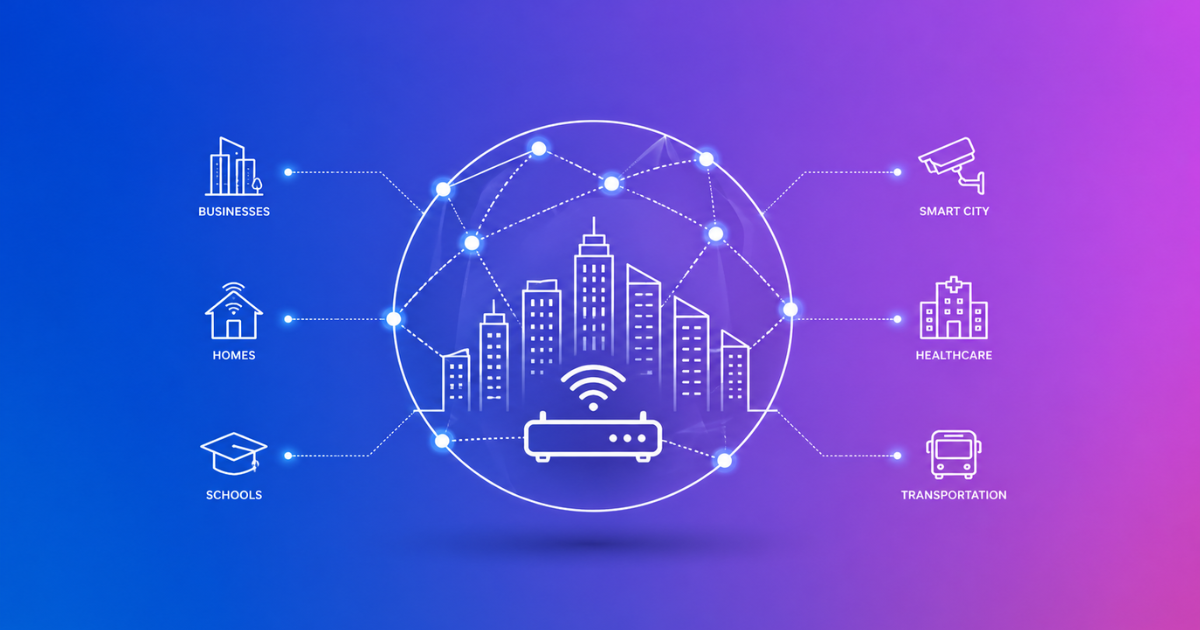
Have you ever wondered how an entire city stays connected—how businesses, homes, schools, and even traffic systems communicate so smoothly? The answer often lies in something called an IP Metropolitan Area Network.
It might sound technical at first, but don’t worry. In this blog, we’ll break it down into simple, everyday language so you can actually understand how it works—and why it matters more than ever.
What Is an IP Metropolitan Area Network?
Let’s start with the basics.
An IP Metropolitan Area Network (IP MAN) is a network that connects multiple local networks across a city or large urban area using Internet Protocol (IP).
Think of it like this:
- Your home Wi-Fi = a small local network
- Your office network = another local network
- An IP Metropolitan Area Network = the system that connects all of these across a city
In simple terms, it acts like a digital highway system, allowing data to travel quickly between different parts of a city.
Why Is an IP Metropolitan Area Network Important?
Now you might be thinking, “Okay, but why should I care?”
Fair question.
Here’s the thing—without an IP Metropolitan Area Network, many of the services we rely on daily wouldn’t work as smoothly as they do.
Here’s what it supports:
- High-speed internet across cities
- Video calls and streaming
- Banking systems and ATMs
- Smart city technologies (traffic lights, surveillance, etc.)
- Business communication and cloud services
Imagine a city where internet speeds are slow and unreliable. Frustrating, right? That’s exactly what an IP Metropolitan Area Network helps prevent.
How Does an IP Metropolitan Area Network Work?
Let’s simplify the technical part.
An IP Metropolitan Area Network connects smaller networks using routers, switches, and fiber optic cables. These devices work together to send data efficiently.
Here’s a simple analogy:
Think of it like a public transport system:
- Local buses = Local Area Networks (LANs)
- Highways and express routes = IP Metropolitan Area Network
- Passengers = Data
The goal? Move data quickly and smoothly from one place to another.
Key Components of an IP Metropolitan Area Network
To understand it better, let’s break it into parts.
1. Core Network
This is the backbone. It handles large volumes of data and ensures everything runs smoothly.
2. Access Network
This connects users (homes, offices, etc.) to the main network.
3. Edge Devices
These include routers and switches that direct traffic.
4. Fiber Optic Infrastructure
This is what allows super-fast data transfer across long distances.
Benefits of Using an IP Metropolitan Area Network
Let’s talk about why cities and organizations invest heavily in these networks.
1. High-Speed Connectivity
One of the biggest advantages of an IP Metropolitan Area Network is speed. Data travels quickly, which means faster internet and better performance.
2. Scalability
As cities grow, the network can expand easily. New areas can be added without disrupting existing connections.
3. Cost Efficiency
Instead of maintaining multiple separate networks, everything is integrated into one system.
4. Better Reliability
With advanced routing and backup systems, downtime is reduced.
Real-Life Example: How You Use It Every Day
Let me give you a simple example.
Imagine you’re in Karachi:
- You order food online
- The restaurant receives your order instantly
- The delivery app tracks the rider in real-time
All of this happens because of systems powered by an IP Metropolitan Area Network.
You might not see it—but you’re definitely using it.
IP Metropolitan Area Network vs Other Networks
It’s easy to confuse different types of networks, so let’s clear that up.
LAN (Local Area Network)
- Covers small areas (home, office)
- Limited range
WAN (Wide Area Network)
- Covers large areas (countries, continents)
- Example: The Internet
IP Metropolitan Area Network
- Covers cities
- Sits between LAN and WAN
So, you can think of an IP Metropolitan Area Network as the bridge connecting local networks to the wider internet.
Where Is an IP Metropolitan Area Network Used?
You’d be surprised how many industries depend on it.
1. Telecommunications
Telecom companies use IP MANs to deliver internet and mobile services.
2. Government and Smart Cities
Traffic systems, surveillance, and public services rely on these networks.
3. Healthcare
Hospitals share patient data quickly and securely.
4. Education
Universities connect campuses and offer online learning.
5. Businesses
Companies use it for cloud computing, communication, and operations.
Challenges of an IP Metropolitan Area Network
Of course, no system is perfect.
1. High Setup Costs
Building infrastructure like fiber optics can be expensive.
2. Security Risks
Since data travels across large areas, it can be vulnerable if not properly secured.
3. Maintenance Complexity
Managing such a large network requires skilled professionals.
But despite these challenges, the benefits often outweigh the drawbacks.
How Is It Different from Traditional Networks?
Older networks were not as flexible or fast.
An IP Metropolitan Area Network offers:
- Better data handling
- Faster speeds
- Easier integration with modern technologies
In short, it’s built for today’s digital world.
The Role of IP in IP Metropolitan Area Network
You might be wondering—what does “IP” mean here?
IP stands for Internet Protocol, which is the system used to send data across networks.
Think of it like an address system for data. It ensures information reaches the correct destination.
Without IP, the entire network wouldn’t function properly.
Future of IP Metropolitan Area Networks
Let’s look ahead.
With technologies like:
- 5G
- Internet of Things (IoT)
- Smart cities
…the demand for IP Metropolitan Area Network solutions is only growing.
What can we expect?
- Faster speeds
- Smarter infrastructure
- More connected devices
Imagine a city where traffic lights adjust automatically based on traffic flow—that’s the future powered by these networks.
Tips for Businesses Using IP Metropolitan Area Network
If you’re a business owner, this matters more than you think.
Here are some quick tips:
- Invest in reliable network providers
- Focus on security measures
- Plan for future scalability
- Monitor performance regularly
A well-managed IP Metropolitan Area Network can improve productivity and customer experience.
Common Questions About IP Metropolitan Area Network
Is it only for big cities?
Not anymore. Smaller cities are also adopting it.
Is it expensive?
Initially, yes—but it saves costs in the long run.
Can it improve internet speed?
Absolutely. That’s one of its main benefits.
Final Thoughts: Why It Matters More Than Ever
Let’s be honest—we live in a world where everything depends on connectivity.
From ordering food to attending online meetings, we rely heavily on stable networks. And behind the scenes, an IP Metropolitan Area Network is often making it all possible.
So next time your video call runs smoothly or your app loads instantly, remember—there’s a powerful system working quietly in the background.
Quick Recap
- An IP Metropolitan Area Network connects networks across a city
- It enables fast, reliable communication
- It supports businesses, governments, and everyday users
- It’s a key part of modern digital infrastructure
Your Turn
Now I’m curious—had you heard of an IP Metropolitan Area Network before reading this?
Or did you just discover how your city stays connected?
Either way, understanding it gives you a whole new appreciation for the technology we often take for granted.
